Posts

Rust Static Analysis and Blockchain Licensing

Image
What is static analysis? Static analysis is an analysis of software artifacts. For example requirements or code, carried out without execution of these software development artifacts. Static analysis is usually carried out using supporting tools. In other words, we can say that static analysis is an examination of requirements, design, and code that differ from more traditional dynamic testing in several important ways. The main goal behind this analysis is to find the bugs, whether or not they may cause failures. As with reviews, static analysis finds bugs rather than failures. The general name for static analysis is linting. lint, or a linter, is a tool that analyzes source code to flag programming errors, bugs, stylistic errors, and suspicious constructs. Simply put, a linter is a tool that programmatically scans your code with the goal of finding issues that can lead to bugs or inconsistencies with code health and style. Some can even help fix them for you! How to analyse ...

Patricia Tries

Image
If you’re not familiar with Merkle Trees, read the previous article to give you a basic idea of what Merkle Trees are, why they’re useful, and give you a glimpse of the significant advantages of Merkle Patricia Trees over standard Merkle Trees. Merkle trees are a fundamental part of what makes blockchains tick. Although it is definitely theoretically possible to make a blockchain without Merkle trees, simply by creating giant block headers that directly contain every transaction, doing so poses large scalability challenges that arguably puts the ability to trustlessly use blockchains out of the reach of all but the most powerful computers in the long term. Thanks to Merkle trees, it is possible to build Ethereum nodes that run on all computers and laptops large and small, smart phones, and even internet of things devices. Unlike transaction history, however, the state needs to be frequently updated: the balance and nonce of accounts is often changed, and what’s more, new ...

Eliptic Curve Cryptography (ECC) and Curve25519

Image
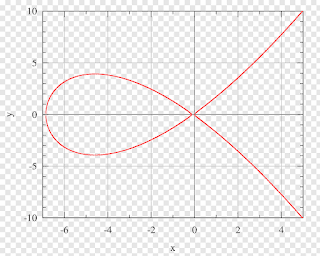
It is always important to start from the basics and in this case, the best place to start from the definitions around the domain. From the previous encryption article , you recall asymmetric encryption algorithm RSA, or Rivest-Shamir-Adleman, is an algorithm that was first developed in 1977 by Ron Rivest, Adi Shamir, and Leonard Adleman, it was adopted in 1978. Ever since its adoption, it has grown to be the most popular cryptosystem. The algorithm was designed to work based on a public and private key in the encryption and decryption of information that is sent over the internet. The information is encrypted using a public key while at the receiver end; a private key is needed to decrypt the information. The algorithm, on the other hand, uses a reverse process for user authentication-a private key is used to encrypt digital signatures, then the receiver can use a public key to decrypt the digital signatures. What is ECC ECC ( Elliptic Curve Cryptography ) on the other hand is a...

CAP Theorem and blockchain

Image
In theoretical computer science, the CAP theorem states that it is impossible for a distributed data store (such as a blockchain network) to simultaneously provide more than two out of the three guarantees: Consistency, Availability & Partition tolerance. CAP Theorem – the parts C: Consistency – At any given time, all nodes in the network have exactly the same (most recent) value. A: Availability – Every request to the network receives a response, though without any guarantee that returned data is the most recent. P: Partition tolerance – The network continues to operate, even if an arbitrary number of nodes are failing. Due to the nature of distributed data stores (such as blockchain), Partition tolerance is a given fact; there will always be failing/unreachable nodes in the network (not least because of the unstable nature of the internet). CAP Theorem states that one has to choose between C (Consistency) or A (Availability) when in the presence of P (Partition): Av...

Upgrading smart-contracts on Solana

Image
Why is Solana so different from Ethereum? By far the biggest reason the development experience between Solana and Ethereum is so different is due to their account model designs. Before we dig into those, it’s helpful to understand why Solana’s account model was designed so differently from Ethereum. Unlike Ethereum, which is designed to run on consumer grade hardware, Solana was designed to optimize transaction throughput on high-end multi-core machines. The Solana team noticed a trend that the number of cores in computers is growing exponentially. In order to take advantage of all these cores and future-proof the protocol, the Solana team designed transactions to be easily parallelized with each other. Account model design So what is actually meant by the “account model” of a blockchain? Well, when an on-chain program is called on a blockchain like Solana or Ethereum, the smart contract needs a way to track certain state like token balances, who owns an NFT, or who the curre...

Contract upgrade anti-patterns

Image
A popular trend in smart contract design is to promote the development of upgradable contracts . To be fair, existing techniques to upgrade contracts have flaws, increase the complexity of the contract significantly, and ultimately introduce bugs - even in the Zeppelin contract upgrade strategy. In this article, we are going to detail our analysis of existing smart contract upgrade strategies, describe the weaknesses we have observed in practice, and provide recommendations for contracts that require upgrades. In a follow-up blog post, we will detail a method, contract migration, that achieves the same benefits with few of the downsides. An overview of upgradable contracts Two ‘families’ of patterns have emerged for upgradable smart contracts: Data separation, where logic and data are kept in separate contracts. The logic contract owns and calls the data contract. Delegatecall-based proxies, where logic and data are kept in separate contracts, also, but the data contr...

Digital signatures

Image
Digital signature Digital signature is a digital analogue of a pen-and-ink signature on a physical document. The purpose of digital signature is to solve the following scenario. Alice has a digital document and wants to attach some “proof” that can be used to prove that she had approved this document. Therefore, digital signature can be recognized as an analogue to her handwritten signature on an ordinary document. Asymmetric Signing Algorithms Asymmetric-key cryptography is based on an exchange of two keys — private and public. Since the public key is accessible to all, anyone could get yours and then contact you pretending to be someone else. Luckily, authentication problems were solved early in the internet age with digital signatures. Two major parts of a digital signature in public-key cryptography are the sender’s private key and a hash. In simple terms, it’s a condensed version of a message. Regardless of the file type or its size, a hash is only 5-20 symbols long. Keep in ...